Learning to navigate difficult conversations with care
Have you ever paid attention to exactly what happens when a conversation gets derailed? Noticing the exact moment, I mean.
You’re in the middle of trying to convey how you feel, or express why something’s important to you. Then the other person cuts in, and you pick up irritation or defensiveness in their tone. You try to get the conversation back on track, but it’s like some part of them has closed off from you, and they’re not open to what you have to say anymore.
Sound familiar?

We all know that sinking feeling when the conversation spirals out of control, and you’re left feeling alone and powerless, longing to be heard for what you were trying to convey in the first place.
And for the other person to realise that you were actually being reasonable - not demanding, or nagging, or too much, or whatever else it is they accuse you of.
You just want to be seen for how you actually are. And you want your needs to matter!
I’ve been studying those moments over the past few years, and really trying to become aware of them as they happen. As well as building that awareness in real-time, I’d also reflect on the moments and analyse them afterwards, and really hone in on the detail.
Over time I started to notice patterns, and I began to understand exactly what goes on just before we tense up and pull away from each other. What is it that pulls us from expansiveness towards contraction?
My name’s Mel, by the way - in case we haven’t met before. I’m a certified Nonviolent Communication trainer and I run regular workshops in Ireland, often in collaboration with my partner, Aaron.
I don’t claim to know all the answers, or that all of my conversations are perfect! But if you were to tell me the words you use when you try to get your point across, I could make a pretty good guess at whether the other person is likely to get defensive in response.
Read on to discover what I’ve learned about these dynamics, and how I might be able to help you untangle some of your own communication issues.
When words don’t land the way you intended
You know those topics that you keep trying to bring up, but you end up in conflict each time? Or the ones you don’t dare to bring up in the first place?
We all have conversations we dread: money, sex, parenting, boundaries, family, work-place dynamics. Or even something as mundane as asking the kids to tidy their bedrooms!
We’ve all had times when we’ve tried to bring up something important, and it doesn’t go the way we hoped. Instead of addressing the issue, we’re met with defensiveness, and left dealing with hurt feelings.
You know that sense of frustration? The times you’ve wished that communicating with the people in your life could be more straightforward? You’re not alone!
What my workshop participants have asked for
At the beginning of our workshops, I often ask participants ‘What brought you here today?’ And quite a few times I’ve heard variations of the same theme: they’re repeatedly tried to bring up an issue, something that’s important to them, and each time they do, the conversation doesn’t go well.
Often the initial issue is something relatively minor. For one woman it was dirty socks that were always left on the floor instead of the laundry basket. For quite a few parents, there’s some variation of arguments over screen-time, or helping out with household chores. For other people, it’s the bigger conversation topics that they dread, or any attempt to speak up for any one of their needs: affection, inclusion, equality, autonomy, respect.
Often the issue is more about the way the conversation goes, rather than the topic itself. It can be exhausting to have the same discussion over and over again, and not feel like you’re getting anywhere. Or to not feel safe to bring something up in the first place because you’re sure it will lead to conflict.

I’ve had just as many participants tell me that they’ve given up entirely, and don’t bring issues up at all, because they want to avoid escalating tension.
A lot of us (especially women, although it can show up within all genders) grew up believing it was our role to keep the peace, and we’ve got very used to putting other people’s needs before our own.
I wonder how many of us are putting up with things we really don’t like because we’re worried about how the conversation will go if we bring it up.
We all know this isn’t how we expected our relationships with the people in our lives to turn out. We want to be friendly and agreeable. We want ease in our conversations. We want to be able to ask for what we want and be received with care. Why does it have to be so hard?
As this seems such a live issue for so many people, I decided to dedicate a whole day’s workshop to exploring this theme. That workshop is called Breakthrough Conversations, and it’s coming up in January 2026. You can read more about it here:
Why learn with me?
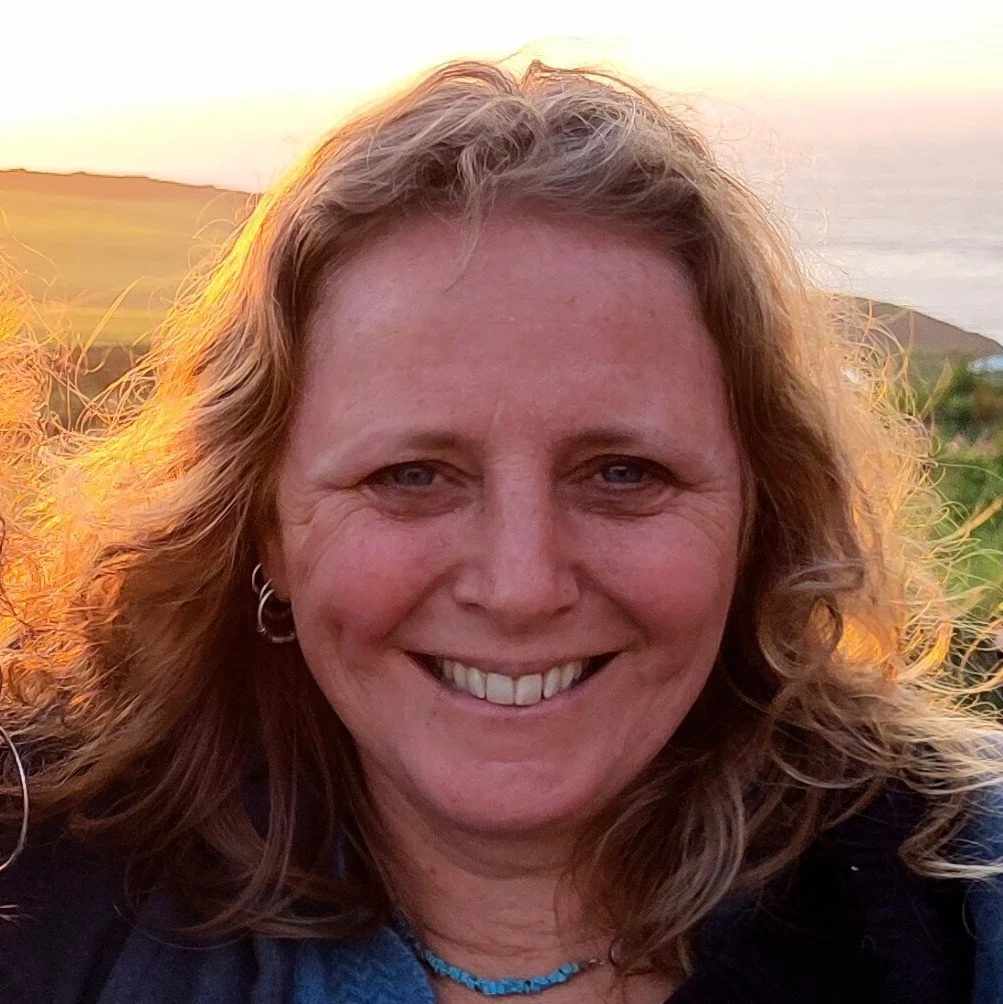
In case you haven’t come across my work before, here’s a bit of background about me and the type of work I do.
I was drawn to this type of work years ago after attending a workshop myself which completely transformed some communication issues I was having with a family member.
I was amazed at how much lighter I felt, and how much of a shift there was in the dynamic between us, and that inspired me to start practising, and trying to learn more. I figured if I could experience such a huge shift in only a couple of days then, with a bit more time and effort, I could completely turn my life around.
At the time, I was single and determined not to repeat the kinds of relationship dynamics that I’d experienced in the past. I was resolved to do the inner work required till I could connect in the healthy, joyful ways that I’d always believed were possible. And now, several years later, all that work has paid off: I’m in a happy, healthy relationship with my partner, Aaron, and we actually lead these types of trainings together.
I’ve always been fascinated by what happens between people. What it is that can move us so abruptly between connection and disconnection. And what we can do differently to foster more connection (meaningful, authentic connection) with the important people in our lives.
I spent five years training to become a certified trainer with the International Center for Nonviolent Communication (CNVC), and I’ve also trained as a coach and as a mediator. I’ve now helped hundreds of people work through their own communication challenges.
Both my current relationship, and my past relationships, have been great training grounds and have provided rich opportunities to really put my learning into practice, to shift unhelpful behaviour patterns, and to learn through experience as well as theory. I’m also a mother to three young adults (my youngest started college just recently), and I had plenty more chances to practice my communication skills as we navigated the teenage years!
I don’t manage to communicate perfectly all the time, and I do still get triggered occasionally. We’re all human! We can’t expect to transcend all our uncomfortable emotional experiences. But through these practices I’ve learned that we can create a lot more internal space between stimulus and response, and be a lot more conscious about the choices we make, and the way that we express ourselves.
The Kind of Space I Hold
I’ve always loved connection, and authenticity, and my workshops are designed to encourage these types of qualities to emerge. Many of my previous participants have told me how surprised they were to realise that they’d started off as a group of strangers, and by the end of the workshop they felt so close and connected to each other.
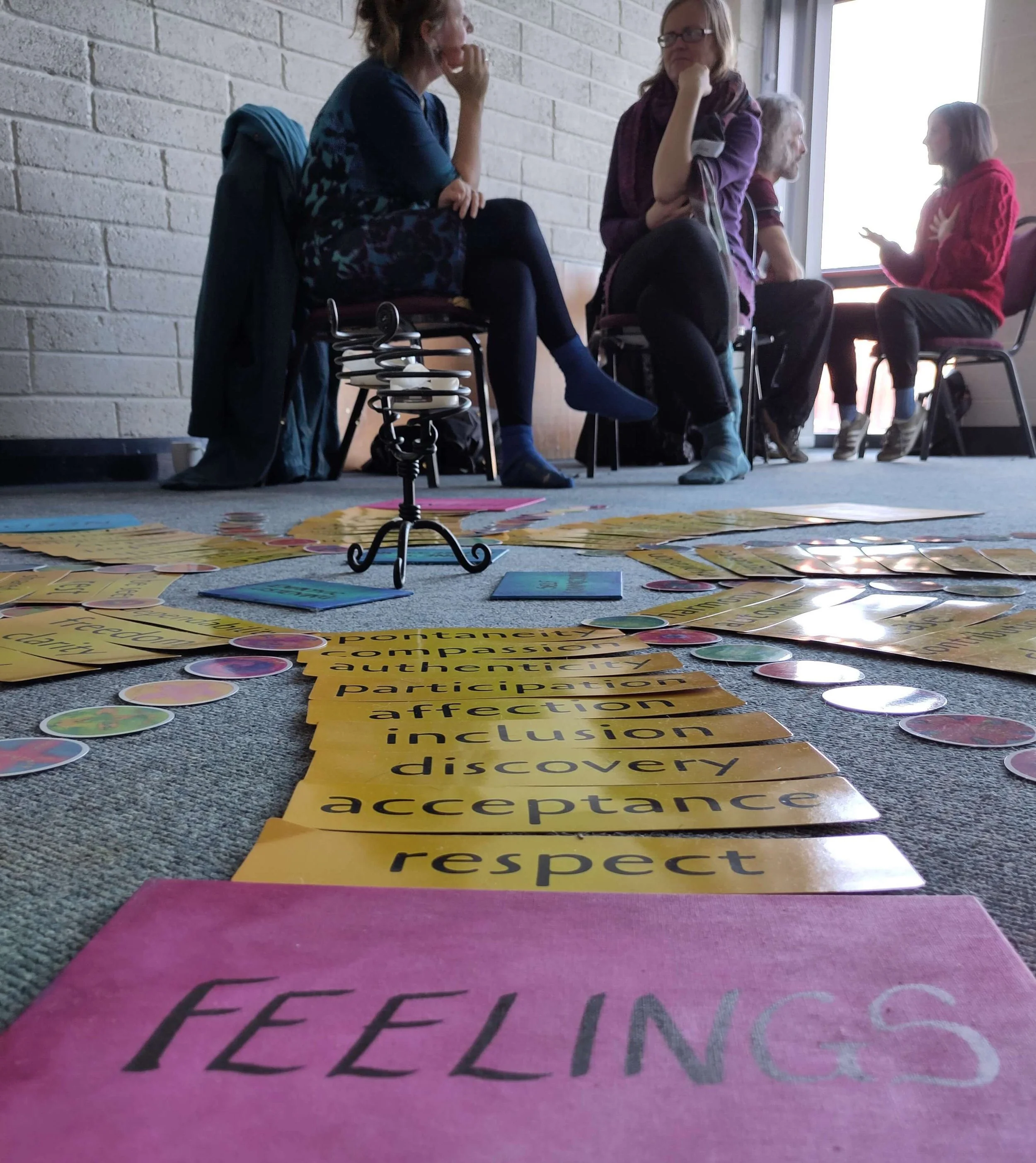
I work from the premise that we all have inner wisdom, and my role is to help you tap into that.
I’ll guide you through processes, I’ll share communication tips and techniques, and I might challenge your thinking!
But ultimately I trust in the innate capacity of human nature, and I don’t believe any of us are broken.
What I can do is help you to shed light on some of the ways we habitually express ourselves, especially in tense moments, and to get more clarity around what exactly it is that’s more likely to trigger the other person.
I can help you to tease out the particular sticky situations that come up for you, and understand what’s really going on, so you can show up with the level of care and awareness that we all like to think we’re capable of.
We work with real situations. The ones that keep you feeling agitated, or frustrated, or hopeless, and keep looping round in your mind. And we explore what comes up with curiosity and compassion for ourselves and others.
A lot of the work takes place through small group processes and meaningful dialogues, with plenty of space for sharing and for self-reflection.
Do these workshops really make a difference to people’s relationships?
These practices can be life-changing, but I also want to be realistic about how much to expect from a one-day workshop. How much of a difference it makes to your life really depends on you, and how much you choose to take on and put it into practice.
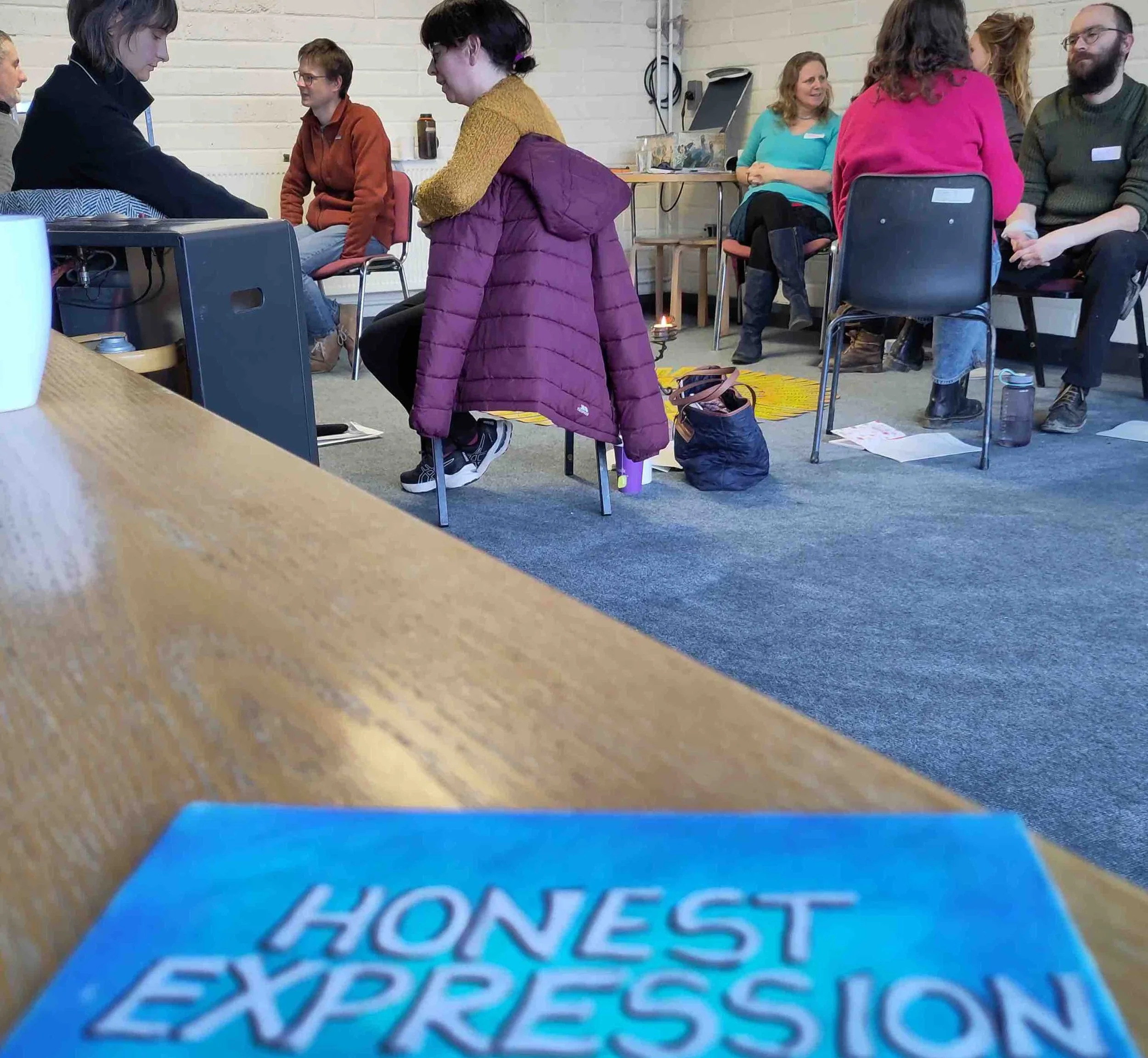
I can help to untangle the tricky moments, and shed light on some of the reasons why conversations get tense. I can also help you become more aware of the choices you have about how to express yourself, and guide you towards alternatives so you can show up in a way that’s aligned with your best intentions. But it’s up to whether you to go back home and apply this in your day to day life.
And it also depends on the other people in your life, and how they show up in the dynamic. We can learn to craft our words with care, so they’re more likely to land in the way we intend, but ultimately the other person’s response is on them. We can’t change other people, only ourselves and our own interactions.
It is true that when one person initiates these sorts of changes it can go a long way towards shifting the dynamic. And it’s also true that in some cases it’s healthier to walk away form the relationship altogether. As we build more self-awareness through these practices we become more clear about our own boundaries, and are able to make choices rooted in healthy self-connection.
How to work with me
If all this sounds like a good fit for you and where you are in your life right now, and you’re already thinking you’d like to work with me, then you might like to read a bit more about Breakthrough Conversations, the one-day workshop I have coming up in January.
I also offer 1-1 coaching, usually online using Zoom. If this is something you’re interested in then please get in touch
Or if you’re intrigued by all this, but you’re not ready to work with me right now, you can also sign-up for updates, and I’ll keep you informed of what else I have coming up,
What other people have to say:
“Mel’s responsive listening to what was said, whether in large circle or group work, helped me feel really connected and comfortable. She stayed connected to the moment, and was open to clarifying if anything wasn’t fully understood, in a way that contributed to my learning. The space felt very secure and held in how Mel carried the small group exercises, and when needed she brought respectful guidance and clarity. ”
“Mel’s coaching has been integral in helping me shift limiting beliefs and feel empowered to step into a more self-compassionate, empowered and purposeful version of myself. Her intuitive wisdom, unconditional compassion and vast range of coaching skills have helped me befriend those shamed, buried parts of myself. She’s enabled me to move beyond overwhelm and anxiety, to a place of feeling authentic, aligned and grounded. So grateful for the opportunity to work with you Mel!”
